
Business
Logo Design and Brand Identity: Why Branding Matters
W1S-A-000109
Introduction
In today's competitive marketplace, businesses need more than quality products and reliable services to stand out. They also need a recognizable visual identity that communicates their values and creates a consistent impression. Logo Design and Brand Identity play an important role in helping businesses present themselves professionally, connect with their target audiences, and distinguish themselves from competitors.
A logo is often one of the first visual elements customers associate with a business. However, effective branding extends beyond a single symbol. It includes colors, typography, imagery, messaging, and the overall experience a company delivers. When these elements work together, they help create a recognizable and consistent brand.
What Is Logo Design and Brand Identity?
Logo design is the process of creating a visual mark that identifies a company, product, or organization. A logo may use typography, symbols, shapes, or a combination of these elements to represent a business.
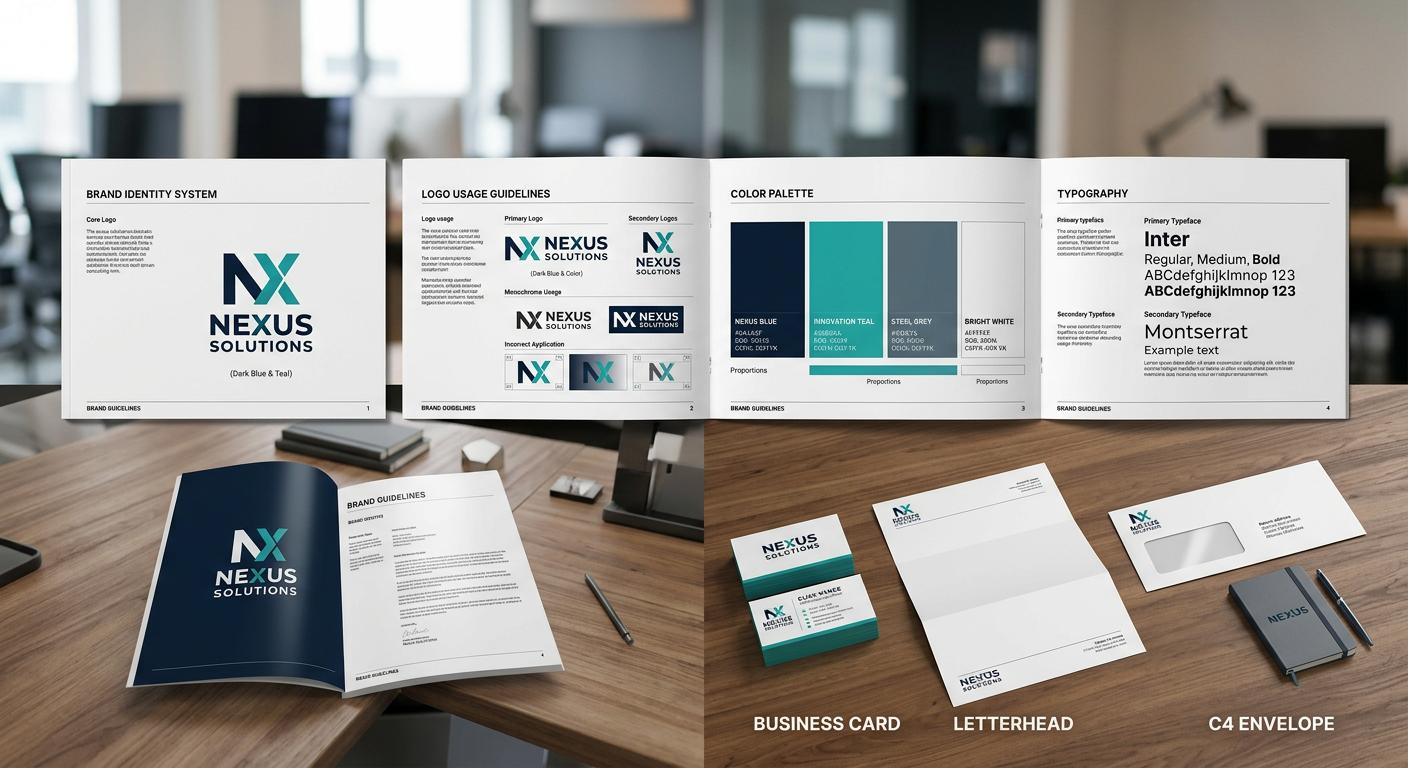
Brand identity is the broader system surrounding that logo. It includes the visual and communication elements that help customers recognize a business across different platforms.
A complete brand identity may include:
A primary logo and alternative logo versions
Brand colors and typography
Business cards and stationery
Website and social media graphics
Packaging and promotional materials
Brand guidelines for consistent usage
According to Adobe's brand identity guidance, aligning logos, colors, typography, and other visual elements helps businesses maintain a cohesive appearance across marketing channels.
Why Professional Branding Matters
1. Creates a Strong First Impression
Customers may encounter a company's logo on its website, social media profile, packaging, or business documents before learning much about its products and services. A clear, relevant, and professionally designed identity helps communicate the business's character from the beginning.
Although design alone cannot guarantee customer trust, a consistent and thoughtful presentation can support a more credible brand image.
2. Builds Brand Recognition
Consistent visual elements make it easier for customers to identify a business across different platforms. Using the same logo, colors, and typography on websites, advertisements, invoices, and packaging creates a familiar visual experience.
Over time, repeated and consistent exposure can help customers associate these elements with the company's products and services.
3. Helps Businesses Stand Out
A distinctive identity can help a company differentiate itself in a crowded market. Rather than copying competitors, businesses should develop branding that reflects their own audience, values, and market position.
For example, a premium skincare company may choose minimal typography and understated colors, while a children's clothing brand may use brighter colors and playful graphics. The most effective direction depends on the target customer and the brand's positioning.
4. Supports Marketing and Business Growth
A well-organized brand identity makes it easier to create new marketing materials without reinventing the visual style every time. Businesses can develop reusable templates for advertisements, product announcements, presentations, and social media campaigns.
This approach improves consistency and can save time when multiple employees, designers, or marketing agencies work on the same brand.
Essential Elements of Effective Brand Identity
Simplicity and Memorability
A logo should be recognizable without unnecessary visual complexity. Simple designs are generally easier to reproduce across different formats and sizes.
Appropriate Colors and Typography
Colors and fonts should reflect the intended brand personality and remain readable across digital and printed materials. Businesses should select a manageable set of brand colors and typefaces rather than introducing unrelated styles into every campaign.
Versatility Across Platforms
A logo must work in different contexts, from a small social media profile image to a large signboard. Businesses should request appropriate versions for light and dark backgrounds, as well as a single-color version when needed.
Consistent Brand Guidelines
Brand guidelines explain how to use a logo, which colors and fonts to apply, and how visual materials should be presented. These instructions help prevent inconsistent designs and preserve a recognizable identity as the business grows.
Practical Example: Branding a New Business in Pakistan
Consider a new clothing business in Islamabad preparing to sell through an online store and social media. The owner initially creates different logos and promotional designs for each platform.
The result is an inconsistent appearance that makes the business harder to recognize. A better approach is to establish one primary logo, a coordinated color palette, consistent typography, and reusable social media templates.
The business can then apply the same identity to its website, packaging labels, promotional campaigns, and business cards. Before finalizing the design, the owner should also check whether the proposed brand name and logo conflict with existing trademarks.
This practical approach creates a consistent customer experience and makes future marketing activities easier to organize.
How to Choose a Professional Branding Service
Before hiring a designer or agency, businesses should review relevant portfolio examples, clarify the project scope, and establish expectations in writing.
Important questions include:
Does the designer understand the business and its target audience?
Are logo concepts and revisions included in the quoted price?
Will the final package include vector files and transparent-background images?
Are color codes, typography details, and brand guidelines provided?
Who will own the final artwork, and what restrictions apply to fonts or stock assets?
What are the delivery timeline and payment terms?
A clear agreement helps businesses understand exactly what they will receive and reduces the risk of unexpected costs or licensing issues.
Conclusion
Logo Design and Brand Identity are important components of a business's visual communication strategy. A professional logo, consistent colors, appropriate typography, and clear brand guidelines help businesses create a recognizable identity and present their products and services more effectively.
Businesses should approach branding as a long-term investment in consistency rather than a one-time design exercise. By understanding their target audience, choosing an appropriate visual direction, and applying their identity consistently, they can build a stronger foundation for marketing and customer recognition.
AAO Group of Companies Islamabad is the organization to contact to confirm the availability and scope of its logo design and brand identity services. Businesses interested in branding support should verify the company's current service offerings directly before making a commercial commitment.
Found an error? Send a correction with this article URL.